

Teak is undoubtedly the most noble material on any sailboat. Warm underfoot, resistant to seawater, aesthetically timeless — it gives the boat a classic elegance that no synthetic material can replicate. But this beauty comes at a price: teak requires regular, rigorous maintenance. Left neglected, it turns grey, cracks, lifts and eventually allows water into the deck. Well maintained, it can last several decades.
In this complete guide, the YachtMate team walks you through every step: from weekly light cleaning to deep sanding, plus product selection and long-term protection. Whether your boat is in winter lay-up or ready to sail, these tips will help you restore and preserve your deck throughout the season.
Why Regular Teak Maintenance Matters
Teak (Tectona grandis) is naturally rich in essential oils that make it waterproof and fungus-resistant — precisely why it has been the material of choice for boat building for centuries. But UV rays, seawater, salt and dirt progressively deplete these natural oils. Without maintenance, the damage is inevitable:
- The wood loses its golden-honey tone and turns silver-grey, then grey-brown.
- Surface fibres fray and the grain opens, allowing water and salt to penetrate.
- Black caulking seams lift and crack, creating water infiltration pathways into the fibreglass deck beneath.
- Splits and cracks appear, accelerating deterioration and weakening the structure.
Preventive maintenance costs far less than a complete deck refit, which can run to several thousand euros at a boatyard. The golden rule: act regularly, with the right products, in the right order.
Before each season, schedule your teak maintenance tasks in the YachtMate app. Automatic reminders ensure you never forget the monthly cleaning or the annual oil application — two actions that make all the difference to your wood's longevity.
Routine Cleaning: Your Main Weapon
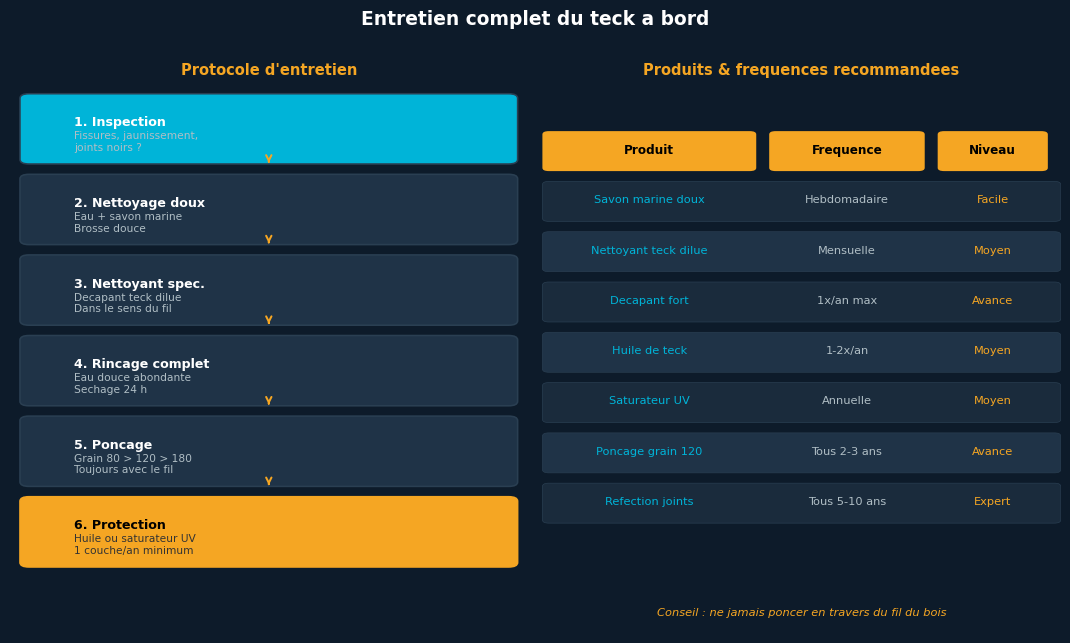
Weekly Gentle Cleaning
The first line of defence is also the simplest: rinse the deck with fresh water after every sea outing to remove salt, then gently scrub with a soft brush and mild marine soap. This basic routine, repeated weekly, is enough to keep teak in great condition for years. Absolutely avoid direct high-pressure jets on the wood: they tear surface fibres and accelerate ageing.
Monthly Cleaning with a Specialist Product
Once a month, use a specialist teak cleaner (diluted according to manufacturer instructions). These products contain surfactants and mild acids that dissolve salt deposits, organic residue and rust marks. Always apply along the grain, working in small sections, and rinse thoroughly with fresh water before the product dries. Monthly cleaning keeps the wood clean without damaging it.
Stripping: When and How?
Stripping is a more intensive operation, to be done at most once a year, or when the wood shows deep stains, significant greying or mould marks. There are two levels of stripping:
Light Stripping (Oxalic or Citric Acid)
For moderate greying or surface stains, an oxalic acid strip is usually sufficient. Apply the product to damp wood, leave 5–10 minutes (without letting it dry), brush along the grain, then rinse abundantly. The wood regains a light, even colour. This type of strip is relatively gentle and can be repeated each season without issue if you don't over-concentrate the product.
Heavy Stripping (Two-Part or Diluted Bleach)
For wood heavily soiled or blackened by fungus, some professionals use two-part strips (acid part A + base part B), or a very diluted bleach solution (1 part to 10 parts water). Caution: these aggressive products require care. Wear gloves, protect stainless steel fittings and seams, and rinse immediately and thoroughly. Use at most every two or three years. Bleach in particular attacks fibres if too concentrated or left too long.
Always test your stripping product on a discreet area before treating the entire deck. Reactions vary depending on the wood species, teak age and prior treatments. A 5-minute test can save you a very unpleasant surprise across your whole deck.
Sanding: Giving Your Deck a Second Life
Sanding is called for when chemical stripping can no longer restore a clean, even surface. It must be done sparingly: each pass removes a thin layer of wood, and teak planks are generally only 18–22 mm thick. A badly managed deck can reach its wear limit within a few years if sanded too frequently.
The Grain Rule
This is the absolute rule of teak sanding: always work along the grain, never across it. Sanding perpendicular to the grain creates visible scratches that subsequent treatments will not hide. Start with 80 grit if the wood is very damaged, then 120, then 180 to finish. An orbital or belt sander is preferable to a random-orbit sander, which can leave circular marks.
Handle Shadow Zones
The spaces between planks (black seams) are often too narrow for a power sander. Use a hand-held sanding block for these areas. If seams are lifting, proud or cracked, this is the time to redo them. Polyurethane or teak mastic caulking comes in cartridges and is applied after carefully cleaning and drying the grooves.
Protecting Teak: Oil, Saturator and Finishes
Teak Oil
Teak oil is the most traditional protective treatment. It nourishes the wood deeply, restores natural oils and gives a beautiful warm tone. It penetrates easily and is applied by cloth or brush in one or two coats, allowing good drying time between passes (minimum 12 hours). Oil needs renewing once or twice a year, as it does not form a surface film and gradually evaporates.
UV Saturator
More recent than classic oil, UV saturator offers superior protection against solar radiation — the main cause of greying. It penetrates the wood and creates a UV barrier while remaining flexible. Application is similar to oil, but it lasts longer: one annual application is sufficient in most cases. It is the ideal choice for boats sailing in very sunny latitudes (Mediterranean, Caribbean).
What to Avoid: Varnish and Wood Stains
Contrary to what you might think, varnishes and gloss stains are not suitable for decks. They create slippery surfaces (fall risk), crack under UV and heat, and trap moisture under their film. Reserve varnish for coamings, hatches and other structural elements kept out of water. On the deck, always choose penetrating matt or satin finishes.
Apply your oil or saturator on an overcast day, out of direct sun and away from rain risk. Excessive heat causes the product to dry too fast, before it can penetrate the wood. Ideally, work in the early morning or late afternoon with the deck in shade.
Black Seam Maintenance: The Often Forgotten Step
The seams separating teak planks are not just decorative — they play a vital waterproofing role. These elastomeric seams (usually flexible polyurethane or SikaFlex) must be inspected every year and replaced as soon as they show signs of lifting, cracking or hardening. A failing seam allows water to seep between the planks, causing moisture in the void spaces beneath the deck and, over time, far more costly damage.
Annual Maintenance Calendar
Here is the maintenance rhythm YachtMate recommends for teak in good general condition:
- After every outing: fresh water rinse, light brushing.
- Weekly: marine soap wash, quick seam inspection.
- Monthly: clean with diluted specialist teak cleaner.
- Before launch (spring): light strip if needed, seam inspection, apply oil or UV saturator.
- At lay-up (autumn): thorough cleaning, complete drying, second coat of protection if wood looks dry.
- Every 2–3 years: light sanding if stains persist, check and partially replace failing seams.
- Every 5–10 years: full deck assessment, complete seam replacement, deeper sanding if needed.
"A well-maintained teak deck speaks to the love a sailor has for their boat. It is the first detail noticed at the dock — and the first neglected after a rushed lay-up."
Products to Keep in Your On-Board Locker
To handle teak maintenance autonomously while sailing or at anchor, here are the essentials to carry: a mild biodegradable marine soap, a concentrated teak cleaner (to dilute), a medium-bristle brush, a clean cotton cloth for oil application, and a small travel-size bottle of teak oil or UV saturator. With this minimal kit, you can intervene quickly at the first signs of deterioration, without waiting to return to your home port.
Plan Your Teak Maintenance with YachtMate
The YachtMate app lets you schedule personalised maintenance reminders for your boat: weekly cleaning, annual saturator application, seam checks. Don't let time make decisions for you.
Download YachtMate Free