
Preparing Children for Boat Life Before Departure
First cruise with children represents major adventure requiring complete physical, psychological and logistical preparation. Before weighing anchor, familiarize children with boat—its characteristic sounds, movements and especially wearing life jackets in realistic conditions. Begin with short day sails, then nights at protected moorings before attempting offshore.
Explain safety rules in age-appropriate language: children 5-8 understand better with images and safety games, while pre-teens need logical explanations about real risks. Gradually increasing sailing on routes where children feel control builds confidence and reduces anxiety significantly.
Adapting Boat to Children Presence
Children need secure personal space for playing, learning and comfortable rest. Create small cabin or corner with low storage where children organize belongings and toys. Install safety nets at vulnerable points (stairs, cockpit). Young children (<5 years) must wear safety harness with tether permanently outside main cabin, regardless of sea state or harbor.
Use YachtMate to record daily children routines (meal times, rest, school if distance learning). This maintains reassuring, predictable structure for children during navigation.
Onboard Safety: Equipment and Non-Negotiable Rules
Life-Saving Equipment Adapted to Size
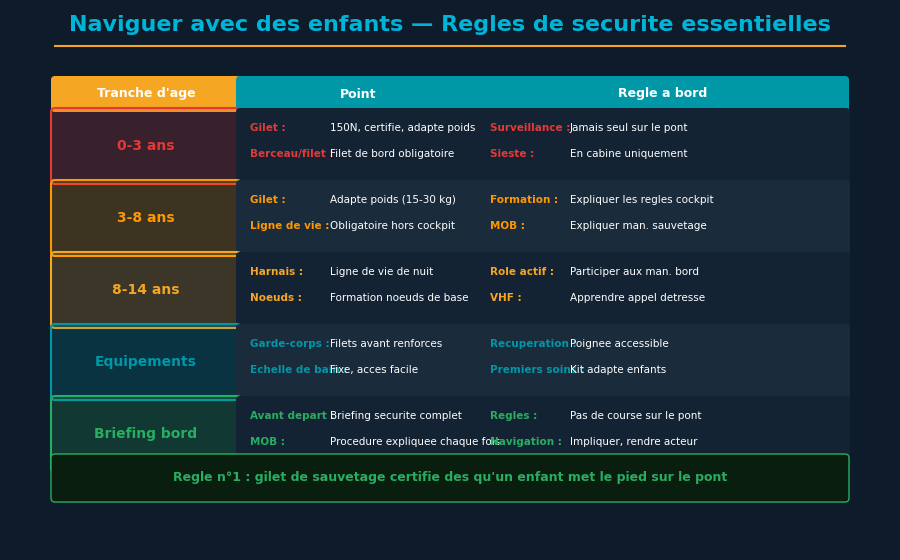
Life jackets are absolutely non-optional. Invest in equipment specifically designed for children with flotation matching weight and age (ISO 12402). Automatic jackets (lanyard inflation) offer more movement freedom despite aesthetic differences. Safety harness with tether must be worn constantly on deck, even for strong swimmers.
- Children 3-6 years — 100N minimum jacket, specialized harness, constant vigilant supervision
- Children 6-12 years — 150N jacket, progressive knot and simple maneuver learning
- Adolescents 12-16 years — Adult-size beginner equipment, basic emergency procedure training
Teaching Children Emergency Procedures
Children 7+ understand simple "man overboard" procedures. Teach visual signals (raised arm, shouting), standardized alarms (Man overboard!), and how to stop boat correctly. Conduct amusing annual simulation with floating object. Children grasp better when transformed into "rescue game" with reward.
Ensure children can shout loud enough to be heard at distance. Main cause of child boat accidents is inability calling for help due to shyness or silent panic reflex.
Best prevention of pediatric boat accidents is active, constant, benevolent and non-oppressive supervision.
Managing Daily Life and Physical Well-Being
Appropriate Nutrition While Cruising
Boat life modifies digestive habits significantly. Sea air, boat movement and psychological stress may cause seasickness or appetite loss. Prioritize easily-digested foods, fresh fruit when available, regular hydration throughout day. Avoid fatty or spicy foods first few days. Children eat better and sleep more consistently at regular mealtimes, maintaining stable sleep rhythm.
Prepare meals from anticipated flexible menu reducing daily cooking stress and anticipating family preferences. Energy bars, yogurt and dried fruit provide excellent sustained-energy snacks during long sailing days.
Sleep and Circadian Adjustment
Boat-living children often sleep less first nights as movement and new sounds disturb normal sleep. Completely normal and temporary. Within 3-5 days, most children adapt and resume normal sleep. Consistent schedules (8:30pm bedtime, 8am breakfast) accelerate circadian adjustment. Soft cabin lighting and white noise (fan) help sensitive sleepers.
Track children's sleep and rest hours in YachtMate with quality notes. This identifies patterns helping adjust navigation schedule for optimal rest and adaptation.
Seasickness Prevention and Treatment in Children
Recognizing Early Signs
Seasickness begins with noticeable paleness, increased saliva production and tendency to curl up. Unlike adults, children often don't verbalize discomfort. Watch for behavioral changes: unusual silence, sudden game disinterest, repeated requests to lie down. Early intervention significantly reduces distress.
Prevention and Treatment Strategies
Fixating on horizon proves most effective recognized technique. Position child at cockpit center, not cabin interior amplifying nausea sensations. Acupressure wristbands exist in child sizes with variable effectiveness but no risk. Medications (scopolamine, diphenhydramine) work well but cause drowsiness—consult pediatrician before using.
For children, fresh ginger (ginger candies or warm tea) and fresh lemon are well-tolerated natural remedies. Regular hydration and frequent small meals prevent vomiting even during discomfort.
Educational and Entertainment Aspects During Sailing
Involving Children in Sailing Tasks
Even young children participate: pulling halyards (supervised), checking chart course, observing sails. Creates contribution sense and project belonging. Older children (10+) learn essential knots, chart reading, basic maneuvers and even assisted watch duty.
Transform sailing into living lessons (geography with islands, meteorology with clouds, marine biology with observed dolphins) maintaining intellectual engagement. Many families document voyages in shared log becoming lasting learning record and keepsake.
Indoor Activities and Managing Boredom
Bring age-appropriate books, board games, drawing materials and creative supplies. Limit screens (tablet, phone) to 1-2 hours daily preserving battery and maintaining interest in enriching alternatives. Children suffer less boredom aboard than expected with creative engaging options.
Document children's discoveries and learning in YachtMate. Create digital "cruise journal" becoming invaluable keepsake and lasting educational record of shared adventure.
Medical and Emergency Aspects
Pediatric Medicine Kit
Child-specific pharmacy aboard should contain: pediatric fever and pain relievers (dosed acetaminophen), antihistamines, topical antibiotics, varied bandages, gentle disinfectant, saline, anti-diarrheal and anti-nausea medications. Store medications in cool dry location away from temperature extremes. Consult pediatrician before departure for personalized dosing advice and alternatives.
When Returning to Shore for Medical Care
Ear infections, urinary infections or fever >39°C require immediate medical consultation. Never cruise far from coast or medical facilities if child has serious medical history (asthma, epilepsy, severe allergies). Helicopter medical evacuation costs enormously; insurance with "medical repatriation" child coverage essential and affordable.
Psychological Preparation and Managing Fears
Addressing Fears Without Amplifying
Many children fear depth, marine creatures or storms. Welcome fears without ridicule but gradually expose to actual elements (small coastal storm before high seas). Explain phenomena (dolphins don't eat humans, storms last hours) in factual reassuring language without dramatizing.
Parental example proves crucial: showing nervousness amplifies child anxiety immediately. Positive confident attitude facing real challenges models resilience and adaptive capacity.
Conclusion: Transformative Family Experience
Family sailing creates indelible memories and strengthens human bonds. With solid preparation, rigorous safety, and flexibility facing inevitable surprises, children grow loving the sea deeply. Some greatest modern navigators began as children aboard small coastal cruiser.
Practical Experience and Continuous Learning
Experience accumulated over time becomes your best teacher in this specific domain. Every voyage, every challenge encountered contributes to your personal expertise. Systematically document your observations, solutions discovered, and results to create valuable knowledge base for future sailing adventures.
Sharing Experience with Community
The sailing community is generally welcoming and generous with sharing experiences and knowledge. Joining specialized forums, online discussion groups, or attending sailor gatherings enables exchanging with other enthusiasts and learning from their respective experiences. This mutual exchange significantly enriches your understanding and practical skills.
Continuous Training and Educational Resources
Maritime field constantly evolves with regular technology innovations, regulatory modifications, and discovery of better practices. Investing in continuing education—through formal courses, specialized readings, or technical webinars—keeps you updated and significantly improves your safety and overall navigation competence.
Integration with Other Onboard Systems
Modern boat systems function not in isolation but as part of integrated ecosystem where each component interacts with others. Understanding these interconnections proves crucial for optimizing overall performance and troubleshooting effectively when problems arise.
Compatibility and Interactions
Before adding new equipment or system, carefully verify compatibility with existing installations. Conflicts between systems cause unexpected malfunctions, energy efficiency loss, or even material damage. Meticulous planning during design phase prevents many costly future complications.
Long-Term Budget Planning
Managing boat budget requires long-term vision and strategic planning. Beyond immediate operational costs, anticipate future equipment replacements, technology updates, and major maintenance predictable as boat ages. Proper planning prevents emergency funding crises and reduces financial stress significantly.
Expense Optimization
Seek opportunities reducing costs without compromising quality or safety. This includes group purchasing with fellow sailors, negotiating with regular suppliers, rigorous preventive maintenance avoiding costly repairs, or researching equivalent alternatives at better market prices.
Advanced Technical Deep Dives
Understanding advanced technical aspects helps you maximize system performance and identify issues before they become serious problems. Technical knowledge empowers you to make informed decisions about upgrades, modifications, and troubleshooting procedures that could save thousands in unnecessary repairs.
Pressure and Performance Metrics
Monitoring key performance indicators—pressure gauges, flow rates, temperature variations, and efficiency percentages—provides insight into system health. Regular baseline measurements allow detecting gradual degradation before complete failure occurs. Most experienced sailors maintain detailed logbooks tracking these metrics monthly, creating historical trends useful for predictive maintenance planning.
Common Failure Patterns and Prevention
Certain components fail in predictable patterns based on usage frequency, environmental conditions, and maintenance quality. Learning these patterns helps you replace components preventively before failure, avoiding emergency situations far from qualified help. Vibration, temperature changes, and water quality variations all contribute to accelerated wear of specific components.
Environmental and Sustainability Considerations
Modern sailing increasingly emphasizes environmental responsibility and sustainability. Understanding ecological impact of your practices and equipment choices aligns sailing with contemporary values and often proves economically beneficial through reduced waste and efficient resource usage.
Waste Minimization Strategies
Implement practices reducing material waste aboard and marine environment impact. Proper disposal of used oil, batteries, and other hazardous materials protects fragile marine ecosystems. Many cruising destinations now have marinas and waste collection facilities specifically supporting environmentally conscious sailors, making sustainable practices increasingly practical and supported.
Future Technology and Innovations
Marine technology evolves rapidly with increasingly sophisticated systems becoming standard. Stay informed about emerging technologies—lithium batteries, advanced sail materials, automated systems, renewable energy solutions—to understand future possibilities for enhancing comfort, safety, and efficiency of your sailing adventures. Early adoption of promising technologies can provide competitive advantages and improved experiences.
Organize Family Safety with YachtMate
Track children activities, learning, daily routines and safety in one integrated tool.
Discover YachtMate →