
Managing black water is one of the most important, yet often neglected, aspects of responsible navigation. As sailors, we have both a legal and moral obligation to protect our oceans and coasts. MARPOL regulations and European Union directives impose strict standards on how we manage sewage from our vessels. This comprehensive guide will help you understand your legal obligations, choose appropriate equipment, and navigate in compliance with national and international regulations.
Understanding MARPOL and EU Regulations
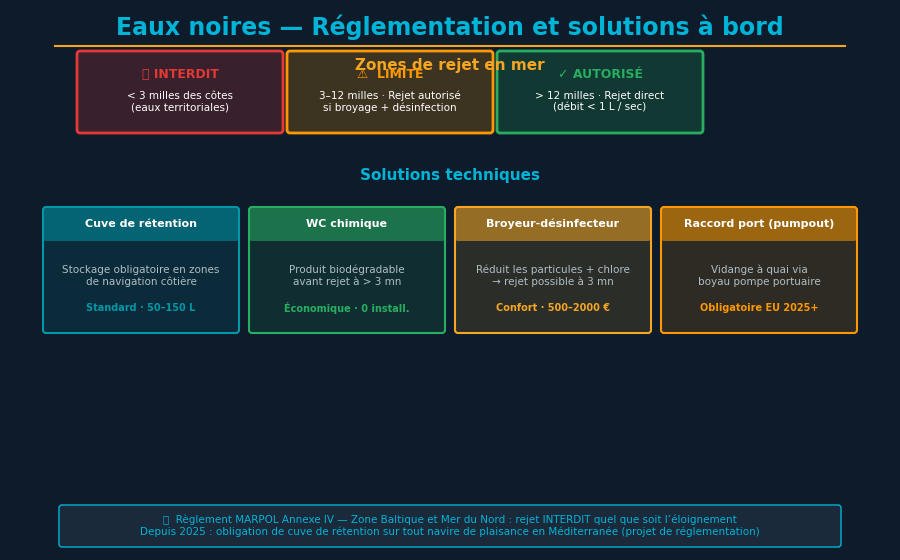
MARPOL (Marine Pollution) is the international agreement governing prevention of marine pollution. Annex IV of MARPOL specifically addresses black water from marine toilets. Rules vary depending on your distance from shore. At 3 nautical miles or beyond, certain systems allow direct discharge, while in coastal waters and sensitive zones, discharge is strictly prohibited. The fundamental principle is that human waste should never contaminate sensitive coastal ecosystems. The Mediterranean has been designated a Particularly Sensitive Sea Area (PSSA) since 1997, meaning no black water discharge is permitted regardless of your boat's range. This regulation extends to the Baltic Sea, Black Sea, and other ecologically sensitive areas. In France, national waters (up to 12 nautical miles) also impose strict restrictions. Spain, Italy, and other Mediterranean coastal nations support these restrictions with substantial fines: up to €10,000 in French Mediterranean waters, €20,000 in Spain, and similar amounts in Italy. These fines are not theoretical – enforcement is active and penalties are steep.
New EU 2026 Directives and Port State Controls
From 2026, the European Union strengthens port state controls significantly. All boats must be able to demonstrate compliance with wastewater treatment regulations. Ports have the right to inspect your systems, and fines for non-compliance increase substantially. An inspection revealing an illegal system can result in vessel detention until the problem is corrected. This is not merely a paperwork issue – non-compliance can prevent your boat from entering major ports. Port authorities actively screen incoming vessels for compliance, and violations are recorded in international databases.
Marine Toilet Systems: Options and Installation
There are three main types of marine toilets, each with specific advantages and disadvantages. Understanding the differences allows you to select the system most suitable for your vessel and cruising patterns. Manual toilets are the simplest and least expensive type. They operate with a manual pump that creates suction to evacuate to the holding tank. They are reliable, durable, and electricity-independent. However, they require physical effort with each use. Modern electric toilets use an electric motor that automates the rinsing and evacuation process. They offer more comfort but consume electricity and may be more susceptible to mechanical failures at sea. The choice between manual and electric depends partly on crew size and partly on your electrical generation capacity.
Vacuum Toilet Systems
Vacuum toilets use negative pressure to suck waste into the tank. This system is highly hygienic, uses very little rinse water (only 0.5 liters per use), and occupies minimal space. It's ideal for small sailboats where space and fresh water are limited. However, initial cost is higher (€2,000–€3,000), and systems are more technically complex. Maintenance can be more challenging, requiring technical knowledge to repair.
Holding Tanks and Capacity Regulations
All vessels larger than 4 meters navigating in coastal waters must have a holding tank. Tank size must be adequate based on your navigation profile. Quick estimation: allow minimum 5 liters per person per day. A 50-liter tank suits a family of four cruising for one to two weeks without pump-out. Larger tanks (80 liters) are recommended for long-distance cruisers. The material is important – tanks must resist chemical degradation and corrosion from biological processes inside the tank. Coastal category (0–3 NM): 20–30 liters minimum. Extended coastal (3–20 NM): 40–60 liters. Large category: 80+ liters. Acceptable materials include polyethylene (PE) or reinforced fiberglass (GRP). Avoid steel, which rusts easily in marine environments. Tank materials should be FDA-food-grade if possible, though specialized marine-grade tanks are always preferred for long-term durability.
Y-Valve Systems and Bypass Plumbing
A Y-valve allows you to switch flow between the holding tank and overboard discharge. This configuration is legal only if you remain beyond 3 nautical miles in unprotected zones. However, for safety and legal reasons, best practice is installing the valve with a locking mechanism that makes illegal coastal discharge physically impossible. This prevents accidental discharge or deliberate violations. The Y-valve must be easily accessible and clearly labeled. Piping should be thermally insulated in winter to prevent freezing in cold regions. Install isolation valves on both inlet and outlet to allow tank servicing without discharging into the cabin area. Regularly clean the tank interior with specialized products to eliminate biofilm accumulation that causes odors. Use only environmentally-friendly and biodegradable toilet products – this is critical for environmental protection.
Pump-Out Stations and Black Water Disposal
Pump-out stations are distributed along all European coasts, though density varies significantly. In France, you'll find stations at most major marinas. In the Mediterranean, each major port has a station. Spain and Italy also offer good pump-out networks. Plan your passages considering pump-out station locations – it's a critical navigation planning element, especially in high summer season when capacity may be exceeded. Some marinas have restricted hours for pump-out services. Pump-out typically costs €5–€25 depending on port and tank size. Many ports offer public pedal pumps in boat-yard areas. Identify in advance where you plan to empty your tank before departure. Some French ports offer free pump-out, others charge. Consult port directories or the Navily app to locate available stations. Plan pump-outs during your monthly itinerary to avoid seeking facilities when your tank is full.
Odor Prevention and Eco-Friendly Toilet Products
Odor is one of the most common marine toilet problems and a leading cause of crew discomfort. Odors typically stem from anaerobic bacteria in the tank. Use only detergents and deodorizers formulated for marine toilets – regular household products can corrode plastic plumbing or disrupt the biological balance in the tank, making odor problems worse. Specialized deodorizers (brands like SeaHawk, Thetford, Nature's Head) contain enzymes that break down waste and eliminate odors naturally. Some sailors prefer natural solutions like white vinegar or marine probiotics. Baking soda is also highly effective for absorbing odors. Absolutely avoid formaldehyde products, toxic to the marine environment. Many biological treatment products actively help decompose waste, actually reducing tank volume over time.
System Winterization for Cold Climates
In regions with cold winters, you must winterize your toilet system. Remaining water in plumbing can freeze and damage pumps and valves, requiring expensive repairs. Completely empty the tank and all plumbing. Rinse with marine-safe antifreeze or RV antifreeze (propylene glycol). Pump antifreeze through the entire system to protect plumbing and pumps. When reopening in spring, rinse thoroughly with fresh water to remove any antifreeze residue before use. This 30-minute procedure can save thousands in repair costs.
Gray Water and General Waste Management
Gray water (from sinks, showers, galleys) isn't regulated as strictly as black water, but responsible management remains important. Detergents and cooking grease can form dangerous biofilms in protected coastal zones. Whenever possible, collect gray water in a second tank and dispose at a station, or in open ocean if beyond 12 nautical miles. Filter solid debris from sink drainage to avoid clogging pump-out equipment.
Legal Compliance and Customs Inspections
Coast guards and port authorities in each coastal nation conduct regular inspections. A non-compliant system can result in vessel detention and substantial fines. Keep pump-out records to demonstrate your legal compliance. In French Mediterranean waters, fines for illegal black water discharge can reach €10,000 plus legal costs. In Spain, it's up to €20,000. Detention periods can exceed 30 days while authorities assess compliance. Take compliance seriously – it's not worth the legal and financial consequences.
International maritime regulations exist because the consequences of improper sewage management are severe: algal blooms, dead zones, and contaminated beaches. By following these guidelines, you become part of the solution to marine pollution. Every small action counts toward protecting our shared ocean resource.
Conclusion
Managing black water is not optional – it's a legal and environmental responsibility. Modern technologies and systems make compliance easy and affordable. By investing a few thousand euros in a good system and following regulations, you protect the marine environment we all love to sail in and avoid costly fines and legal troubles. The sea sustains us – it's our duty to protect it.
System Installation and Maintenance
Proper installation is crucial for system longevity. All piping must be made from chemical-resistant material – copper and steel should be avoided as they corrode rapidly. Use high-quality marine-grade rubber hoses with stainless steel hose clamps. Pumps must be accessible for maintenance and repairs. Ensure all tanks are properly secured to prevent excessive movement during heavy weather.
Documentation and Record Keeping
Maintain detailed maintenance records. Note the date of each pump-out, the port where it occurred, and any issues encountered. These records demonstrate your due diligence in case of inspection. Take photographs of the installed system for insurance documentation and as proof of compliance. Keep pump-out receipts and inspection reports. Having comprehensive documentation can be the difference between a warning and a substantial fine during an inspection.
Navigate responsibly
YachtMate helps you stay compliant with maritime regulations.
Discover YachtMate →