
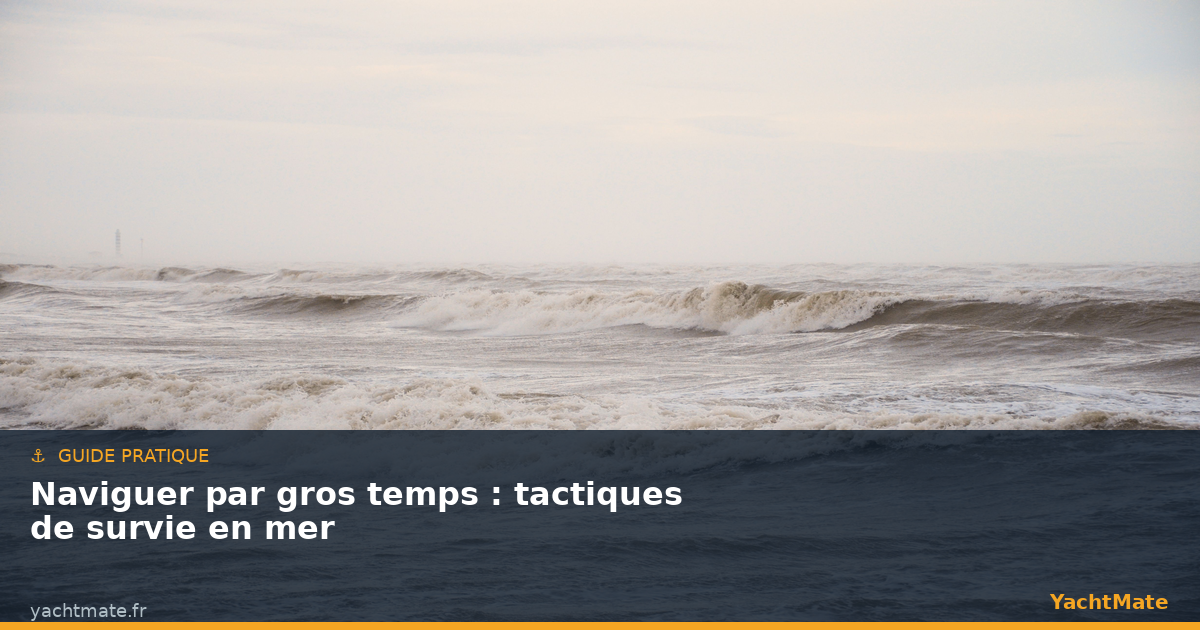
No boater goes looking for a storm, but sooner or later the sea sets its own pace. A blow that builds faster than forecast, a depression that deepens, and your relaxed day out turns into heavy weather. In those moments, what matters is not the crew's strength but the quality of their decisions and how quickly they act on them. Handled well, a storm is exhausting but survivable; underestimated, it becomes a real danger. This guide walks through the main heavy weather tactics — reefing, running before it, heaving-to, towing a drogue or deploying a sea anchor — to help you keep control when the sea turns angry.
First of all: anticipate rather than endure
The best heavy weather tactic is the one you never have to use. Reading the marine forecast carefully before and during a passage remains your first line of defence. Coastal bulletins, GRIB files, the barometer's pressure trend — all of these let you delay a departure, pick a kinder weather window, or reach shelter before conditions deteriorate.
When a blow becomes unavoidable, anticipation happens on board. You prepare the boat while there is still time: everything stowed, hatches shut, the crew fed, hydrated and clipped on. This is the golden rule: reduce sail, gear up and plan your tactic before the sea really builds, never at the height of the storm when every manoeuvre becomes hazardous.
"Reef when you first think of it; you'll wish you had by the second time." If you're wondering whether to reduce sail, it's already time to do it. Reefing early protects the boat, the crew and your own clear thinking for what comes next.
Step 1: reduce sail and secure the boat
As soon as the wind builds, the priority is to cut down sail area to limit heel and keep the boat manageable. You take reefs in the mainsail, roll or change the genoa for a smaller sail, and beyond a certain force you set a storm jib, that small, very strong headsail built for bad weather. The aim is not speed but a controlled pace and good balance.
At the same time you secure the whole living and deck space: gear stowed, seacocks checked, jackstays rigged, and every crew member clipped on with a harness. A man overboard in heavy weather is a life-threatening emergency that is extremely hard to resolve — far better to do everything to make sure it never happens.
Running before it: keeping ahead of the weather
Running before it means putting the wind and sea behind you to move away from the bad weather or simply let the worst pass through. It is often the most instinctive and comfortable tactic: the boat stops slamming into the waves, heel decreases, and you sometimes pull away from the heart of the depression. It does, however, require sea room to leeward (open water ahead) and constant attention at the helm.
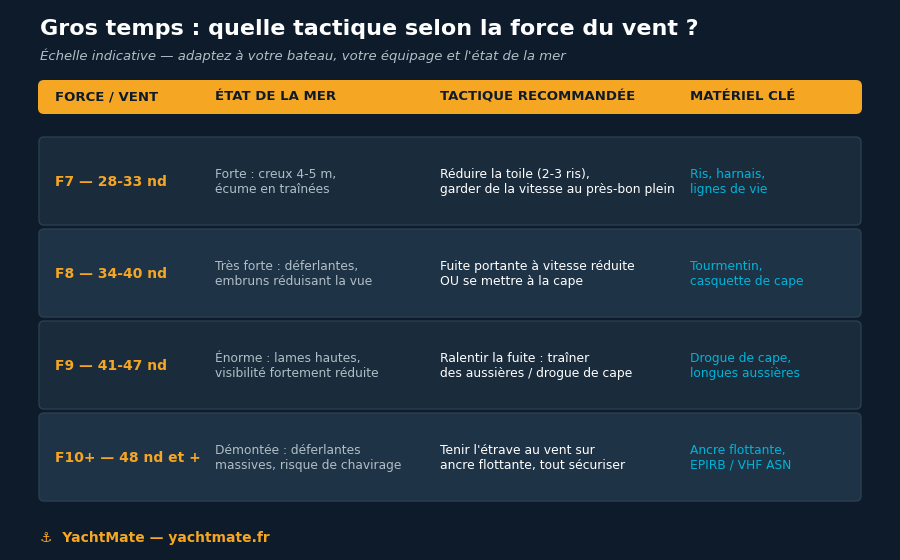
The great danger of running is going too fast. If the boat outpaces the waves, it risks burying the bow into the wave ahead (broaching), rounding up violently, or even pitchpoling end over end. So you often need to slow down: reduce sail further, then tow long warps in a bight behind you or deploy a drogue, that hydraulic brake which steadies the course and prevents broaching.
When running, take breaking seas slightly on the quarter, not dead astern, to avoid presenting the flat transom to the wave. An angle of 10 to 20° gives a better compromise between stability and safety while keeping the boat steerable.
Heaving-to: letting the boat look after itself
Heaving-to means bringing the boat almost to a stop facing the sea by balancing its sails and helm. On a sailboat, the classic hove-to position is set by backing a storm jib (or a heavily reduced jib), easing the reefed mainsail right out and lashing the helm to leeward. The boat then settles at roughly 50 to 60° off the wind, drifts slowly and creates a slick to windward that flattens the sea just ahead of it.
The huge advantage of heaving-to is the rest it provides: the boat looks after itself, the crew can catch their breath, eat, sleep in shifts and recover. It is a precious tactic when fatigue threatens or you are waiting for an improvement. Every boat behaves differently when hove-to: it is essential to have tried it in manageable weather to learn its angle and drift before relying on it in a storm.
Lying a-hull and active heaving-to
When the wind becomes too strong even for the storm jib, you move to lying a-hull: with no sail set, you hold the boat facing or angled to the sea, sometimes helped by a sea anchor. Active heaving-to, by contrast, keeps a little sail to maintain some way and control. The choice depends on the wind force, the sea state and how your own hull responds.
The sea anchor: holding the bow into the wind
The sea anchor is a large cone of fabric streamed from the bow on a long rode. Deployed, it strongly brakes the drift and keeps the bow — the strongest part of the boat — facing the sea. It is a last-resort tactic in very heavy weather, or for boats that do not lie comfortably hove-to, notably some multihulls and motor boats.
Its effectiveness depends on careful rigging: a very long rode to absorb the snatch loads, a strong attachment point, and protection against chafe. Used badly, a sea anchor can subject the boat and its ground tackle to enormous strain. Like heaving-to, it should be prepared and tested before you genuinely need it.
"At sea you don't fight the storm, you negotiate with it. The right tactic isn't the most heroic one — it's the one that keeps the boat and crew intact until the lull."
Choosing the right tactic
No tactic is universal: it all depends on wind force, sea state, available room and the type of boat. In short:
- A building blow: reduce sail early and secure the whole boat.
- Room to leeward: running before it at a controlled speed moves you away from danger.
- Tired crew or waiting for a lull: heaving-to provides rest.
- Very heavy weather or a boat that won't heave-to: sea anchor or drogue.
- Dangerous lee shore: never run towards it; better to hold offshore hove-to.
The rule that overrides all others: stay clear of a lee shore. The worst situation in heavy weather is being driven towards land, where the waves break and the smallest mistake becomes irreversible. Far better to have sea room, patience and a well-held defensive tactic.
Facing heavy weather with YachtMate
The YachtMate app helps you anticipate and manage bad weather. The built-in marine forecasts and wind trend tracking let you spot a blow coming and pick the right moment to reach shelter. Under way, the display of your heading, route and nearby harbours supports your tactical decisions, while the charts keep you a safe distance from lee shores and hazards. Well prepared and well informed, you face heavy weather with the calm of a sailor who knows where they're going.
Prepare every trip with YachtMate
Marine weather, heading, route and nearby shelters together in one app built for boaters. Anticipate heavy weather and sail safely.
Download YachtMate for free