
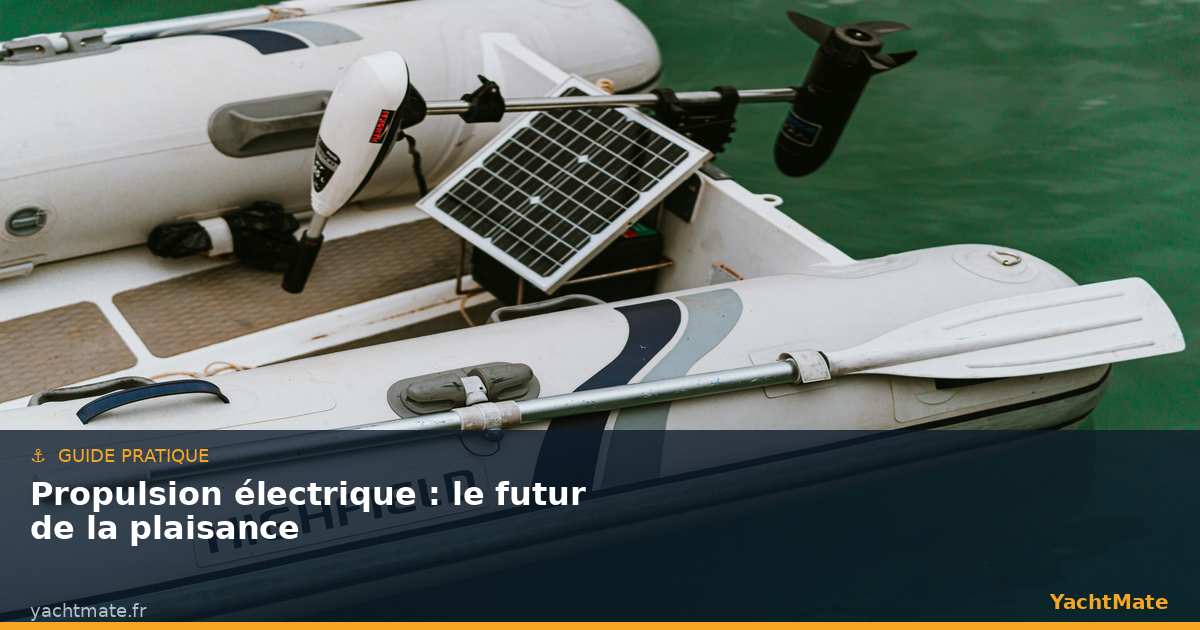
The electric revolution has arrived in marinas. In 2026, more than one in five new leisure boats sold in Europe is equipped with an electric or hybrid drive. From silent dinghies to offshore sailboats and day-cruisers, electric propulsion is establishing itself as the future for eco-conscious sailors — without sacrificing the pleasure of sailing.
But between marketing promises and the reality of the sea, how do you make sense of it all? What range can you realistically expect from an electric motor? Is the hybrid boat the best compromise? And what are the real long-term costs? This guide covers everything you need to know before making your choice.
Why Switch to Electric Propulsion?
The primary motivation for sailors going electric isn't purely environmental — it's also deeply practical and economic. An electric outboard motor requires no oil changes, no fuel filters, no belts to replace. Annual maintenance often amounts to rinsing with fresh water, checking connections, and updating the controller firmware.
Silence is the other killer argument. Sailing on electric means hearing the waves, the gulls, the breeze in the rigging. It's rediscovering the very essence of boating, without the relentless hum of a diesel. For protected anchorages or harbour entries, the electric motor's discretion is appreciated by neighbouring boats.
Use the YachtMate app to calculate your power consumption on your usual routes: enter your motor, battery capacity and favourite destinations. The app shows your remaining range in real time and available charging points in nearby harbours.
Electric Outboard Motor: The Most Accessible Solution
Key Brands and Their Features
The electric outboard market has become well-structured over the past three years. Torqeedo remains the benchmark with its Travel range (ultra-portable, 0.5–2 kW) and Cruise range (1–10 kW), featuring GPS integration that calculates range based on wind and current. ePropulsion (Spirit and Navy ranges) offers excellent value, with lightweight units and an intuitive interface. Mercury and Suzuki have launched their own electric lines, backed by the service networks of these outboard giants.
Real-World Range: What the Numbers Say
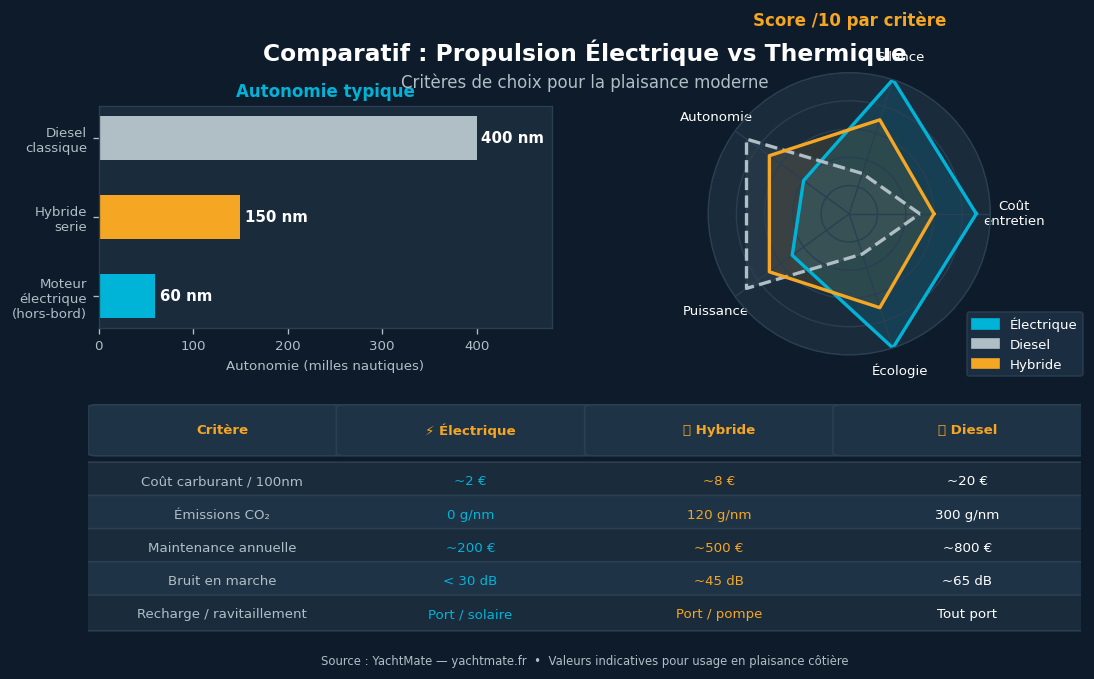
A 3 kW motor powered by a 1 kWh battery delivers approximately 20–30 nautical miles at economical speed (4–5 knots). This covers most day trips from a marina: harbour entry and exit, crossing a bay, coastal transfers. For longer cruises, additional batteries or solar panels complement the installation.
Hybrid Propulsion: The Best of Both Worlds?
The series hybrid system pairs a low-power diesel generator (which charges the batteries while underway) with an electric propulsion motor. This architecture offers virtually unlimited range while retaining the advantages of quiet electric operation in harbour manoeuvres or sensitive areas.
How Does It Work?
In a series hybrid, the combustion engine never directly drives the boat — it only charges the batteries. The electric motor is the sole propulsion unit. Result: you sail on electric 70–80% of the time, the diesel generator only kicks in when needed (rough seas, long crossings, low batteries). Fuel consumption drops 40–60% compared to an equivalent conventional diesel.
On a hybrid, activate "Silent Port" mode in YachtMate before entering low-emission zones. The app automatically detects declared marine LEZs (Low Emission Zones) in its database and reminds you to cut the generator.
Solar and Wind Integration: Boosted Autonomy
The real revolution of recent years comes from combining electric propulsion with onboard renewable energy generation. A 10-metre sailing boat can carry 400–800 W of flexible solar panels on the coachroof or bimini, sometimes supplemented by a mast-mounted marine wind turbine (100–400 W depending on wind). In the Mediterranean or Caribbean, this combination allows many boats to sail almost fuel-free during peak season.
Energy management has become the new sport for self-sufficient sailors. Modern BMS (Battery Management Systems), coupled with an app like YachtMate, provide a complete real-time view of the energy balance: instant solar output, state of charge, motor and equipment consumption, range forecast. It's a genuine revolution for offshore cruising.
Charging in Harbours: Where and How?
The main limitation of pure electric remains charging infrastructure. In 2026, major European marinas are progressively installing fast-charging stations for boats. In France, marinas like La Rochelle, Marseille, Nice and Brest have already deployed fast-charge solutions. In the Mediterranean, Croatian and Greek marinas are also beginning to equip, driven by EU clean mobility regulations.
YachtMate includes an interactive map of electric charging points in marinas. Plan your stopovers around available stations and reserve your berth in advance from the app. The database is updated in real time by the user community.
Investment Costs and Return on Investment
Electric requires a higher initial investment than an equivalent combustion motor. A 3 kW electric outboard with battery costs €3,000–5,000, versus €1,500–2,000 for an equivalent petrol outboard. However, savings on fuel and maintenance typically recover the extra cost within 5–7 years depending on usage. For a typical boat using 200 engine hours per year, annual savings amount to €800–1,200.
Financial incentives exist in several European countries. In France, the marine bonus-malus scheme and regional grants can cover up to 30% of the electric surcharge. Check with your local sailing federation before purchasing.
Electric Motor for Sailboats: Special Case and Best Practices
On a sailboat, the engine is primarily used for harbour manoeuvres and when wind is insufficient. These short, intermittent uses are ideal for electric. A 9–11 metre sailboat with a 7–10 kW electric motor and 5–10 kWh of batteries covers 80–90% of its engine needs on a typical Mediterranean cruise. Energy recovery (regeneration while sailing under autopilot) is available on some systems, recharging batteries as the boat moves under sail.
"Since fitting a Torqeedo Cruise 10 on my Jeanneau 36, I only burn diesel on the rare overnight passages. Over a 4-month Mediterranean season, I spent less than €80 on propulsion energy." — YachtMate user testimonial
Plan Your Cruises with YachtMate
Electric range calculator, map of charging stations in marinas, real-time consumption tracking: YachtMate is the essential app for the eco-conscious sailor.
Download YachtMate for Free