
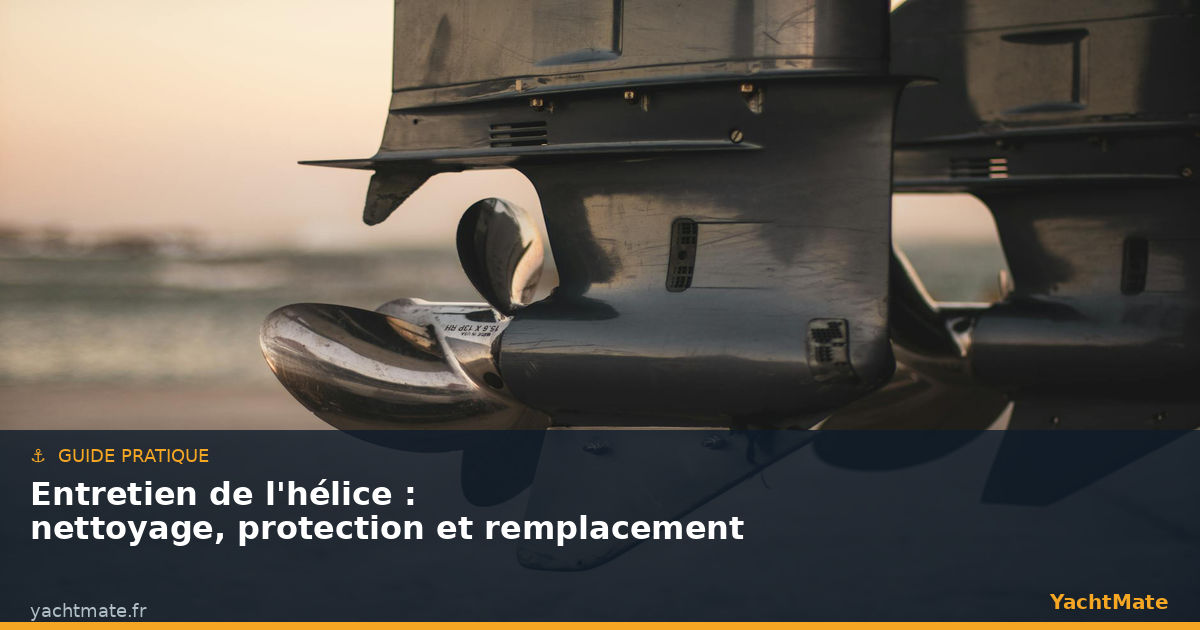
The propeller is one of the most heavily used components on your boat, yet one of the least inspected. Between biological fouling, galvanic corrosion, accidental impacts and pitch wear, a neglected propeller can reduce your vessel's performance by 15 to 30% and irreparably damage your shaft and engine. This comprehensive guide explains how to maintain your propeller season after season to sail safely and efficiently.
Why propeller maintenance is essential
The propeller operates in a particularly aggressive environment: salt water, micro-organisms, stray electric current and mechanical shocks. Each of these factors contributes to the progressive deterioration of the part. A propeller fouled with algae or barnacles creates turbulence that increases fuel consumption and places greater strain on the engine. Bronze that is poorly protected against galvanic corrosion can deteriorate in a single season.
Beyond performance, a damaged propeller is a safety risk. Abnormal vibrations can cause mechanical damage to the shaft, bearings and seals, with the risk of water ingress. Regular maintenance allows these problems to be anticipated before they become costly or dangerous.
Log the date of your last haul-out and the type of antifouling used on the propeller in YachtMate. A simple note in the digital logbook will ensure you never exceed the manufacturer's recommended intervals.
Visual inspection: the first reflex before every outing
Before launching and ideally before every significant outing, get into the habit of inspecting your propeller from the stern or a low pontoon. Here are the points to check systematically:
- Blade integrity: no chips, deformations or deep scratches
- Radial and axial play: the propeller should not move abnormally on its shaft
- Key condition: this part links the propeller to the shaft; excessive play indicates wear
- Sacrificial anode: check it is still present and not more than 50% consumed
- Fouling: algae, mussels, barnacles and other colonising organisms
Cleaning the propeller: techniques and frequency
Mid-season cleaning
Between haul-outs, the propeller accumulates biological fouling that reduces its efficiency. In the Mediterranean, the critical period runs from May to October. In the Atlantic, the rhythm is different but equally important. A mask and snorkel, or a diving bottle if you are comfortable freediving, are all you need. Use a stiff plastic brush (never metal on bronze) and a scraper to remove most fouling. Avoid abrasive tools that would scratch the surface and promote corrosion.
During stopovers, take advantage of the clear waters of Mediterranean anchorages to visually inspect your propeller from the side of the boat. A diving mask close at hand is enough. If you sail frequently, a monthly cleaning session during summer keeps performance high.
Annual haul-out: the major service
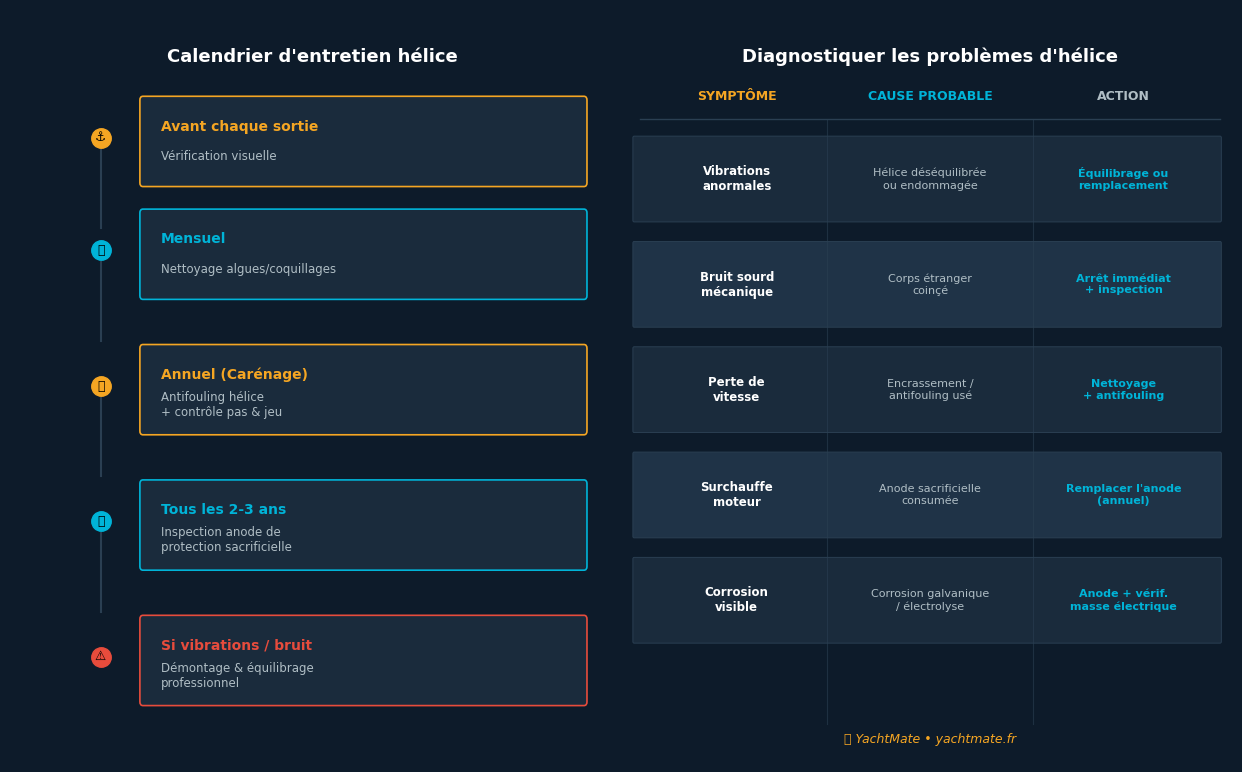
Once a year, during the winter or spring haul-out, the propeller must be completely removed for a thorough service. This is the time to:
- Remove the propeller from the shaft (carefully retrieve the key and nut)
- Clean the surface with a product suitable for bronze or stainless steel
- Inspect blade pitch and compare with manufacturer specifications
- Check leading and trailing edges for chips and deformations
- Check the shaft at the propeller and the shaft seal
- Apply propeller-specific antifouling (cupriferous or silicone type)
- Replace the sacrificial anode if more than 50% consumed
- Lightly grease the shaft thread before reassembly
Propeller antifouling: protect without over-complicating
Propeller antifouling is different from that applied to the hull. It must be flexible enough to withstand the mechanical stresses of high-speed rotation, and effective against colonising organisms. Two main product families exist:
Cupriferous antifouling for propellers
Products like Hempel Antifouling for propellers slowly release copper-based biocides to prevent organisms from settling. They are compatible with bronze, stainless steel and aluminium propellers (with an appropriate anode). Application in 2 cross coats after surface preparation is recommended.
Silicone coating
Silicone coatings such as Propspeed or Eco-Speed are not biocidal but create an ultra-smooth, non-adhesive surface on which organisms struggle to attach. They generally last 2 to 3 years, reduce turbulence and slightly improve performance. More expensive upfront, they often prove more economical over time.
Never apply standard hull antifouling to your propeller! Eroding or self-polishing products do not withstand rotation and flake off quickly, potentially damaging the surface. Use only products formulated for propellers.
Sacrificial anodes: first line of defence against corrosion
Galvanic corrosion is the propeller's number one enemy. When two different metals are in contact in an electrolyte (salt water), the less noble metal corrodes rapidly. A bronze propeller and a stainless steel shaft form a potentially destructive galvanic couple. Sacrificial anodes (zinc in salt water, aluminium in brackish water, magnesium in fresh water) corrode in place of the protected parts. They must be checked annually and replaced as soon as they are more than 50% consumed.
Diagnosing problems: vibrations, noise and loss of performance
Damaged propellers rarely manifest spectacularly. Learn to recognise the warning signs:
Vibrations at higher rpm
A vibration that appears in a specific rpm range and disappears beyond it generally indicates blade imbalance. This may stem from a light impact, a bent blade or asymmetric fouling. Solution: thorough cleaning followed by professional balancing if the vibration persists.
Thudding or clanking noise
A thudding noise when going astern, or a metallic clanking sound, can indicate abnormal play in the propeller or the presence of a foreign body (rope, net). Immediate stop and inspection are required.
Loss of thrust or over-consumption
If your boat has lost speed at the same engine rpm, first check for propeller fouling. If the propeller is clean, the pitch may have been altered by an impact. A boatyard with the right equipment can measure and correct the pitch.
When to replace the propeller?
A well-maintained propeller can last 15 to 20 years on a moderately used sailing boat. Some signs indicate that replacement should be considered:
- Cracked or heavily chipped blades (repair impossible or not cost-effective)
- Permanent pitch deformation that cannot be corrected
- Advanced cavitation erosion (pitted appearance on blades)
- Excessive play in the central bore due to wear
- Deep corrosion that has reduced metal thickness
"A well-maintained propeller means 10 to 15% fuel savings and an engine life extended by several years. It is the best investment a sailor can make beyond the annual haul-out."
Track your propeller maintenance with YachtMate
YachtMate lets you plan and log all your maintenance: haul-out, antifouling, anodes, replacement. Receive reminders before important deadlines and keep your boat's complete history.
Download YachtMate for free